$8 Billion, Given Away Before Anyone Noticed
Chuck Feeney made billions in duty-free shopping, then secretly gave away his entire stake, and for 15 years almost nobody knew.

The Billionaires Club, No. 2. One fortune, one decision, looked at properly.
For most of the 1980s and 1990s, the business magazines that rank the rich had Charles "Chuck" Feeney on their lists, worth billions. They were wrong, and he never corrected them.
When the New York Times finally told his story, on 23 January 1997, it reported that Feeney had given away more than $600 million over the previous 15 years, so secretly that most of the people who received it never learned who it came from. His fortune was gone too. He had transferred almost everything he owned to two charitable foundations and was, the paper said, worth less than $5 million.
"I simply decided I had enough money," he told the Times. "It doesn't drive my life."
The Dyson story in this series was about a decision to stop asking permission. Feeney's is about a decision most very rich people never seriously consider: to give the fortune away while you're still alive, all of it, and not tell anyone.
Brandy, cigars and a long-haul idea
Feeney was born in Elizabeth, New Jersey, in 1931, during the Great Depression, to Irish-American parents. His mother was a hospital nurse and his father an insurance underwriter. He served as a radio operator in the US Air Force and went to Cornell University on the GI Bill, graduating from its hotel school in 1956.
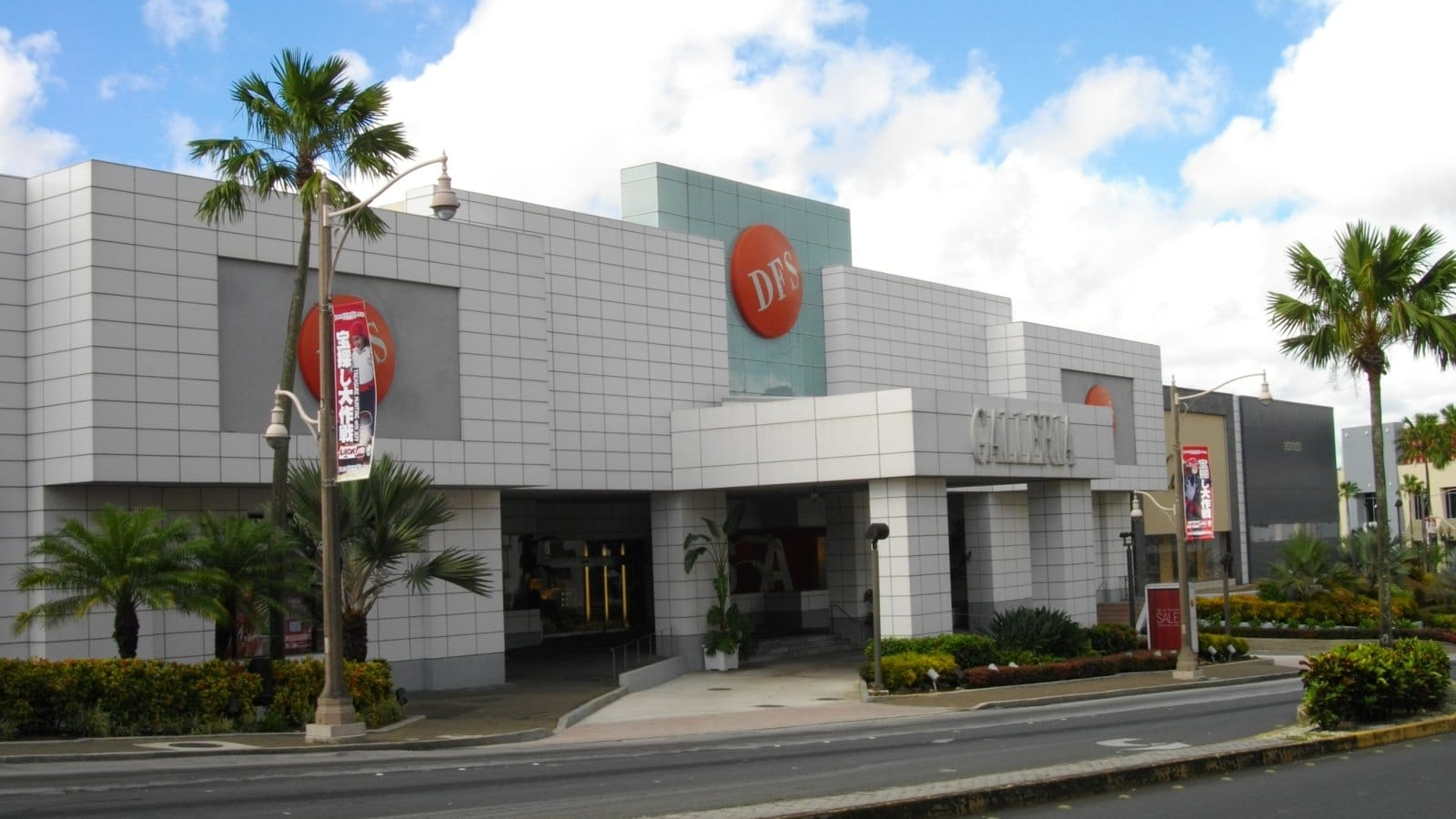
In 1960 he and a partner, Robert Miller, set up a company selling things like brandy and cigars to travellers in duty-free shops. Duty Free Shoppers, later DFS Group, grew into a giant. By 1997, the Times reported, it had annual sales of more than $3 billion, mostly liquor and luxury goods, more than Saks Fifth Avenue and Neiman Marcus combined.
Feeney owned 38.75% of it.
The signature nobody knew about
He started Atlantic Philanthropies in 1982. Two years later, in 1984, he gave it his entire 38.75% stake in DFS. According to the Times, even his partner, Miller, was not told.
What followed was one of the strangest arrangements in modern philanthropy. The foundations were based in Bermuda, like DFS, which kept them outside American disclosure rules for private foundations. Feeney declined to take a personal tax deduction for his gifts, because claiming one would have revealed them. Grants were paid by cashier's cheque. Recipients were told the money came from several generous "clients" who wished to remain anonymous. At the College Board, the Times reported, the mystery donor was simply called "anonymous". Board members of the foundation didn't mention it to their own families.
Harvey Dale, a New York University tax law professor who helped Feeney set it all up, summed up the man to the Times in 1997: "He doesn't own a house. He doesn't own a car. He flies economy. And I think his watch cost about $15."
Feeney's reason for secrecy was practical as well as temperamental. Giving anonymously, he said, let him get on with his life without a queue of people asking for money. Atlantic later had another reason. For years its grants came with a requirement that recipients not publicise them. Christopher Oechsli, Atlantic's chief executive, told the Times in 2017 that this was "also a way to leverage more donations": another donor might give in return for the naming rights.
How the secret came out
The secret held for about 15 years. What ended it was business, not conscience.
In 1996 the French luxury group LVMH agreed to buy control of DFS. The New York Times put the deal at $2.47 billion. Miller opposed the sale, and a lawsuit over it would have revealed that Feeney's stake was owned not by Feeney but by his foundations. So, in January 1997, he told the story himself.
The Times reported that the sale proceeds and other assets he had handed over left the foundations with $3.5 billion, even after $610 million had already been given out. Had they been based in America, it said, they would have ranked as the country's fourth-largest grant-making foundation. They were run by about 20 professional staff.
The same article raised the most controversial thing he did with his own money. Separately from Atlantic, Feeney had made personal donations to the Washington office of Sinn Féin, the political wing of the IRA, which had declared a ceasefire in 1994. Public records showed about $280,000, the Times said, making him the group's largest American donor. Feeney acknowledged that some would criticise it, and said the gifts had been monitored to make sure they supported only non-violent activities. In 2017 the Times added that in the early 1990s he had met paramilitaries in Belfast and urged them to give up armed conflict for electoral politics.
Giving while living
Coming out of anonymity didn't change his habits much. Until he was 75, the Times reported in 2017, he flew only in coach and carried his reading in a plastic bag. "You can only wear one pair of pants at a time," he had said.
It didn't slow down the giving either. Feeney kept growing the pot by investing, including early stakes in companies such as Facebook, Priceline and Alibaba, according to the Times. And he set Atlantic a deadline: spend everything, then close.
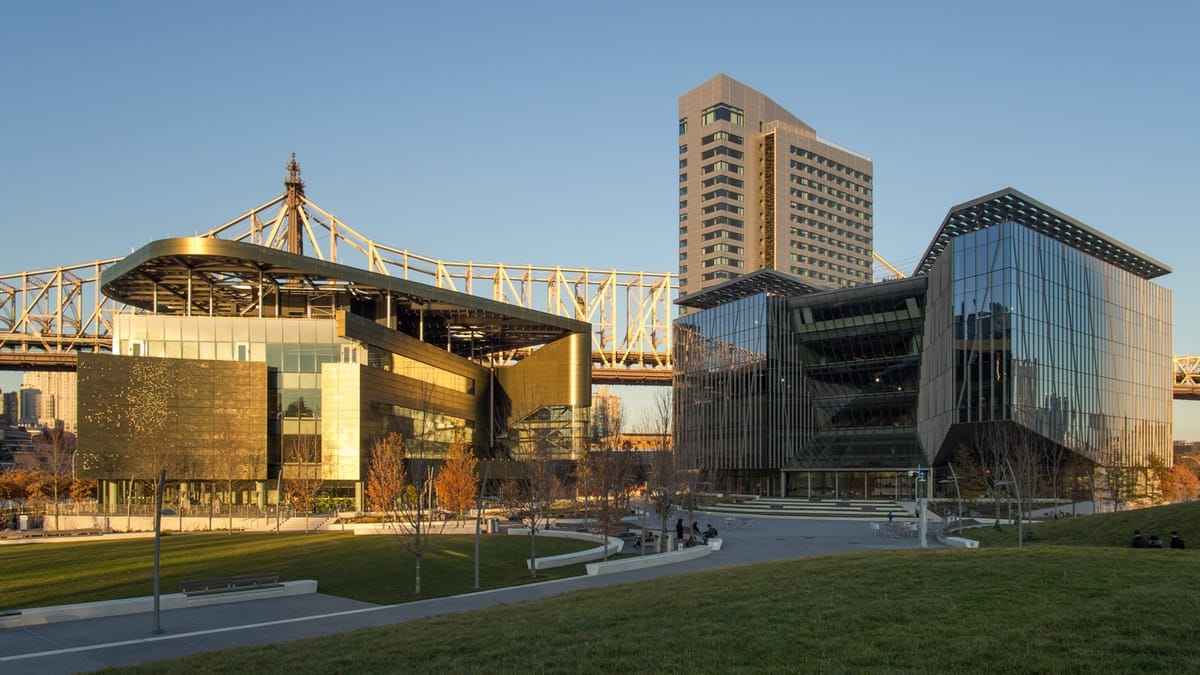
The money went to things that were hard to fund. Forbes, in 2020, tallied $3.7 billion for education, including nearly $1 billion for Cornell, and $350 million of that towards Cornell's technology campus on New York's Roosevelt Island. It counted more than $870 million for human rights and social change, including $62 million towards ending the death penalty in the US and $76 million for campaigns supporting the passage of the Affordable Care Act, and more than $700 million for health, including $270 million to improve public healthcare in Vietnam. In Northern Ireland, the BBC reported, Atlantic gave $570 million over four decades, much of it to universities and integrated schools.
The Times put it best in 2017. Some $2.7 billion of his money paid for about 1,000 buildings across five continents, and his name was on none of them.
In February 2011 Feeney signed the Giving Pledge, the campaign started by Bill Gates and Warren Buffett to persuade the very rich to give away most of their wealth. "I cannot think of a more personally rewarding and appropriate use of wealth than to give while one is living," he wrote in his letter. In 2014, at a Forbes event, Buffett said: "It's a real honor to talk about a fellow who is my hero and Bill Gates' hero. He should be everybody's hero."
Down to zero
In December 2016 Atlantic made its last grant, $7 million to Cornell to support students doing community service. Altogether, the Times reported, Feeney had put $8 billion into his philanthropies. His own net worth was slightly more than $2 million. He and his wife, Helga, were living in a rented flat in San Francisco.
"You're always nervous handling so much money, but we seem to have worked it pretty well," he said.
On 14 September 2020 he signed the papers that formally closed the Atlantic Philanthropies, in a ceremony held over Zoom. "I feel very good about completing this on my watch," he told Forbes. His advice to anyone wondering about giving while living: "Try it, you'll like it."
Feeney died in San Francisco on 9 October 2023, at the age of 92. By the BBC's count, Atlantic had given more than $8 billion to causes on five continents.
He had made the decision in 1984, at 53, with DFS still booming. The secrecy, the economy seats, the cheap watch and the deadline all followed from it.
Read and watch
- The Billionaire Who Wasn't: How Chuck Feeney Secretly Made and Gave Away a Fortune by Conor O'Clery (2007), the biography written with Feeney's cooperation.
- Secret Billionaire: The Chuck Feeney Story, the RTÉ documentary.
Sources
- The New York Times, Judith Miller, "He Gave Away $600 Million, and No One Knew", 23 January 1997: nytimes.com
- The New York Times, "LVMH to Buy Duty-Free Empire for $2.47 Billion", 30 October 1996: nytimes.com
- The New York Times, Jim Dwyer, "'James Bond of Philanthropy' Gives Away the Last of His Fortune", 5 January 2017: nytimes.com
- Forbes, Dan Alexander, "Warren Buffett Honors His Hero, The Billionaire Who Secretly Gave It All Away", 18 June 2014: forbes.com
- Forbes, Steven Bertoni, "The Billionaire Who Wanted To Die Broke . . . Is Now Officially Broke", 15 September 2020: forbes.com
- BBC News, "Chuck Feeney: Entrepreneur and philanthropist dies", 10 October 2023: bbc.co.uk
- BBC News, "Chuck Feeney: The billionaire who gave it all away", updated October 2023: bbc.co.uk
- The Giving Pledge, letter from Charles F. Feeney, 3 February 2011: givingpledge.org
Red Ink Black Ink is independent and has no connection with Chuck Feeney's family, the Atlantic Philanthropies, DFS, Cornell University or anyone named in this story. Photographs are used under the licences shown.